

 Ben Snape
When we talk about marketing strategies for architects, referral marketing, simply known as “word of mouth” is one of the most powerful.
Clients that come from referrals are easier to work with because they have pre-selected you already – and for certain reasons want to work specifically with you.
Referrals take time to build up and they often seem uncontrolled, – but there are measures you can take to increase the amount of referrals you get for your architectural practice.
Referral marketing is particularly effective in the architectural industry, where trust and reputation are crucial. It’s also the fastest way to get to bigger and better clients.
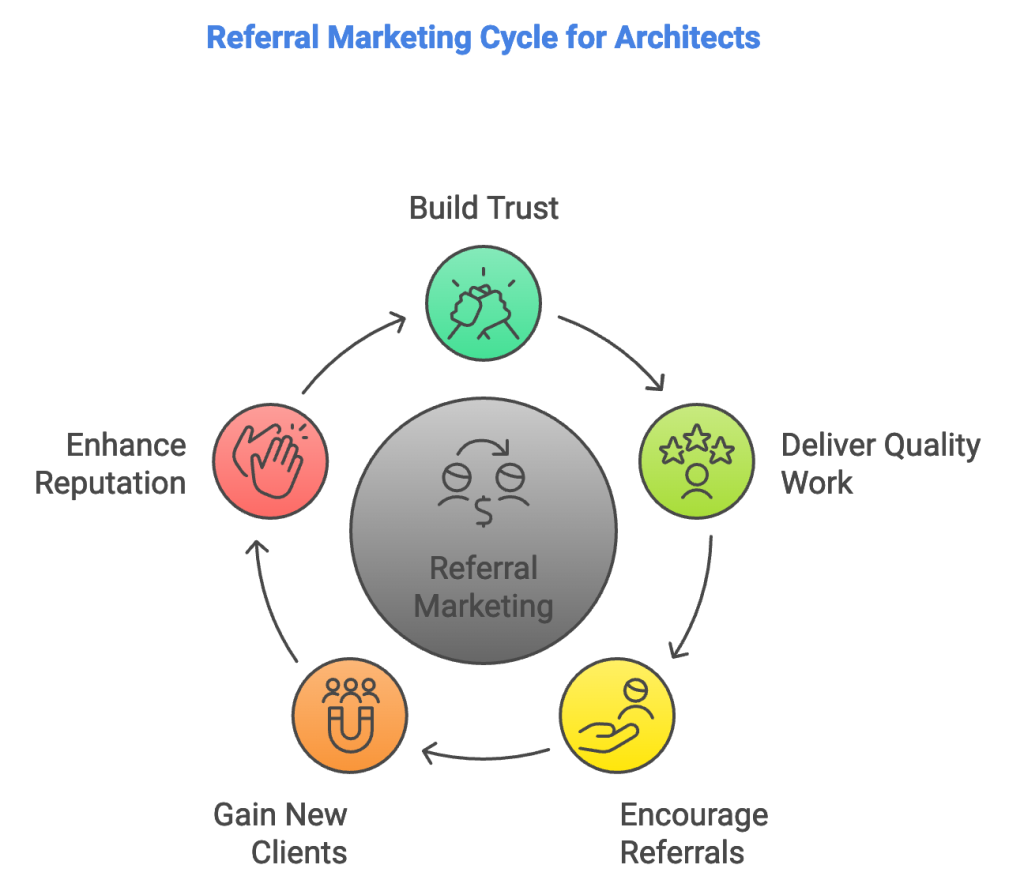
Let’s go over some architecture referral marketing concepts and tactics that will help you grow.
Deliver Exceptional Service
First things first, you have to be good.
Client satisfaction is the foundation of referrals and testimonials.
You have to consistently deliver high-quality work and maintain strong communication throughout the project.
Identify key advocates
This is essential – start by identifying clients who are highly satisfied with your work and likely to refer others.
Not every client is able to give you the referral you’re looking for.
Consider expanding your services or entering new markets to get access to high-value powerful referrals.
Network and Build Relationships
Attend industry events, join professional organizations, and network with other professionals. This will help you get referrals even from non-clients. Build a brand that consistently showcases authority.
Referral marketing relies heavily on strong relationships with existing clients, so prioritize building and nurturing them.
See our guide on effective networking for architects.
Follow Up with Clients
After completing a project, follow up with clients to ensure they are satisfied. This can also be a good time to ask for referrals and testimonials.
Most architectural firms do it using CRM tools, but PlanMan makes it easy too. A great advantage of using PlanMan is that you get an all-in-one dashboard for your project management along with the client communication module. Sign up for your free trial today!
Offer Incentives
Consider offering incentives for referrals, such as discounts on future services or gifts.
Exclusive content could be a good incentive – take some time to build a system for production of industry reports or other high-edge content and deliver it regularly to your past clients.
Make sure your clients are aware of the referral program and understand how it works.
Ask for Testimonials
Don’t hesitate to actually ask satisfied clients for testimonials.
Make it easy for them by providing a few guiding questions or a template they can fill out.
PlanMan was designed to help you boost client satisfaction, and asking for testimonials is extremely easy within our client communication module – they can do it in the client portal where they get all the project updates.
Train your staff accordingly
You have to make sure that your staff members understand the importance of the referral process and can communicate it effectively to clients.
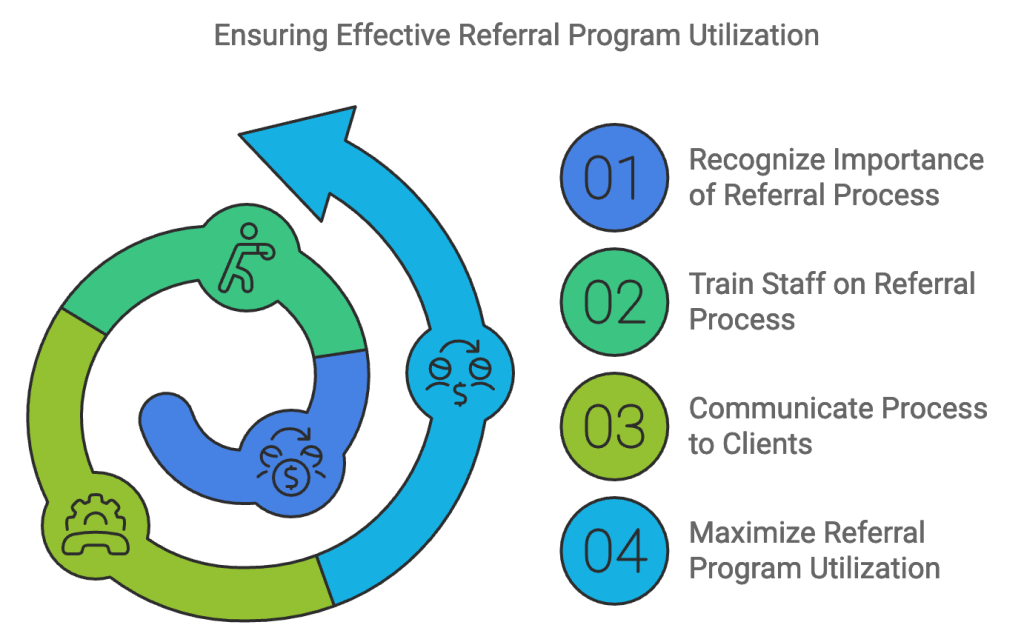
Without proper training, the referral program may not be utilized to its full potential.
Maintain an Online Presence
Ensure your website is up-to-date and includes a section for client testimonials.
A strong online presence can help build trust with potential clients. We’ve put together guides on both online reputation management and online marketing, so check them out.
Share your projects and client testimonials on social media platforms.
Engaging content can attract potential clients and encourage existing clients to share their positive experiences.
Showcase Your Work
Regularly update your portfolio with your best projects.
Use professional photography and detailed case studies to highlight your design philosophy and unique value proposition.
Asking for testimonials the right way
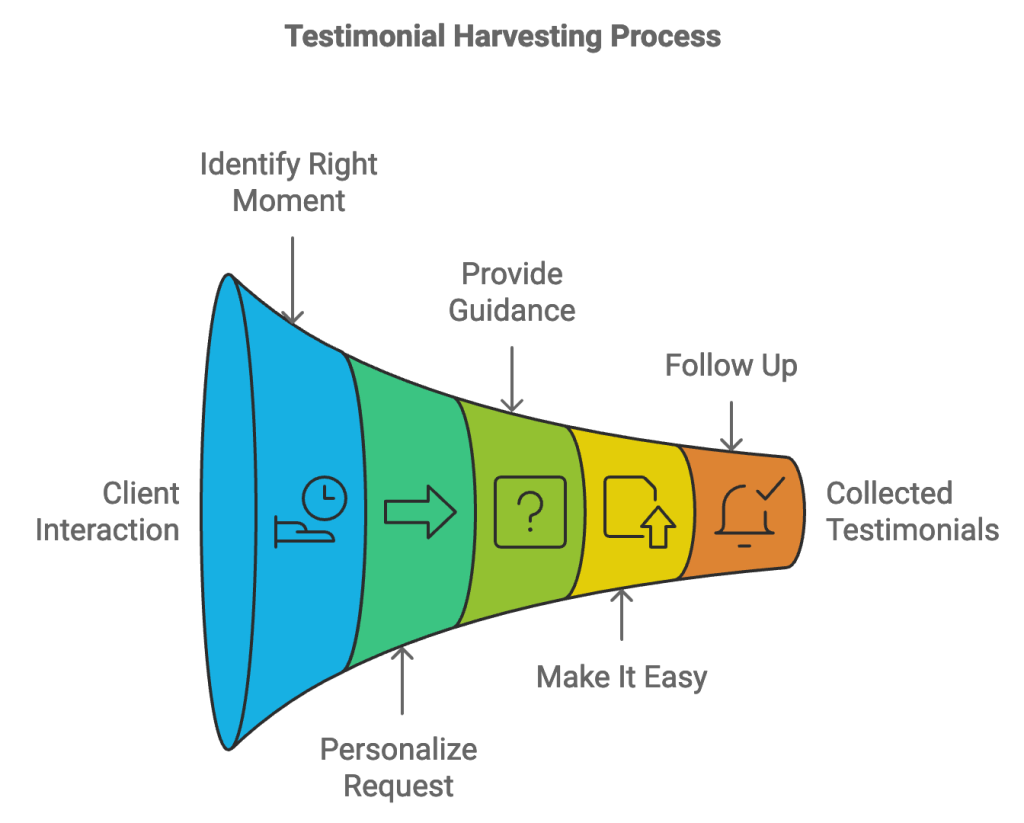
Fresh, relevant testimonials are one of the key components of referral marketing for architects. You need to develop a system of testimonial harvesting – these best practices will help:
Identify the Right Moment
Timing is crucial. The best time to ask for a testimonial is right after a successful project completion when the client is most satisfied with your work.
Personalize Your Request
Reach out personally, either through a phone call or a personalized email. Mention specific aspects of the project that went well and how their feedback would be valuable.
Always thank your clients for their time and feedback. A small token of appreciation, like a discount on future services, can also be a nice gesture.
Provide Guidance
Clients often appreciate some direction. You can provide a few questions to guide their testimonial, such as:
- What was your experience working with us?
- How did our services meet your expectations?
- What specific aspects of our work did you find most valuable?
Make It Easy
Consider using a feedback form or a survey tool to make the process straightforward. This can be done through platforms like Google Forms or SurveyMonkey.
Follow Up
If you don’t receive a response, a gentle follow-up can be helpful. Remind them of the importance of their feedback and how it helps you improve your services.
Referral marketing is generally more cost-effective than traditional advertising. You can reach wider markets, and win bigger projects, – but you need to set up a system and stick to it.
Try PlanMan today and see how many scenarios for client communication it lets you implement!